
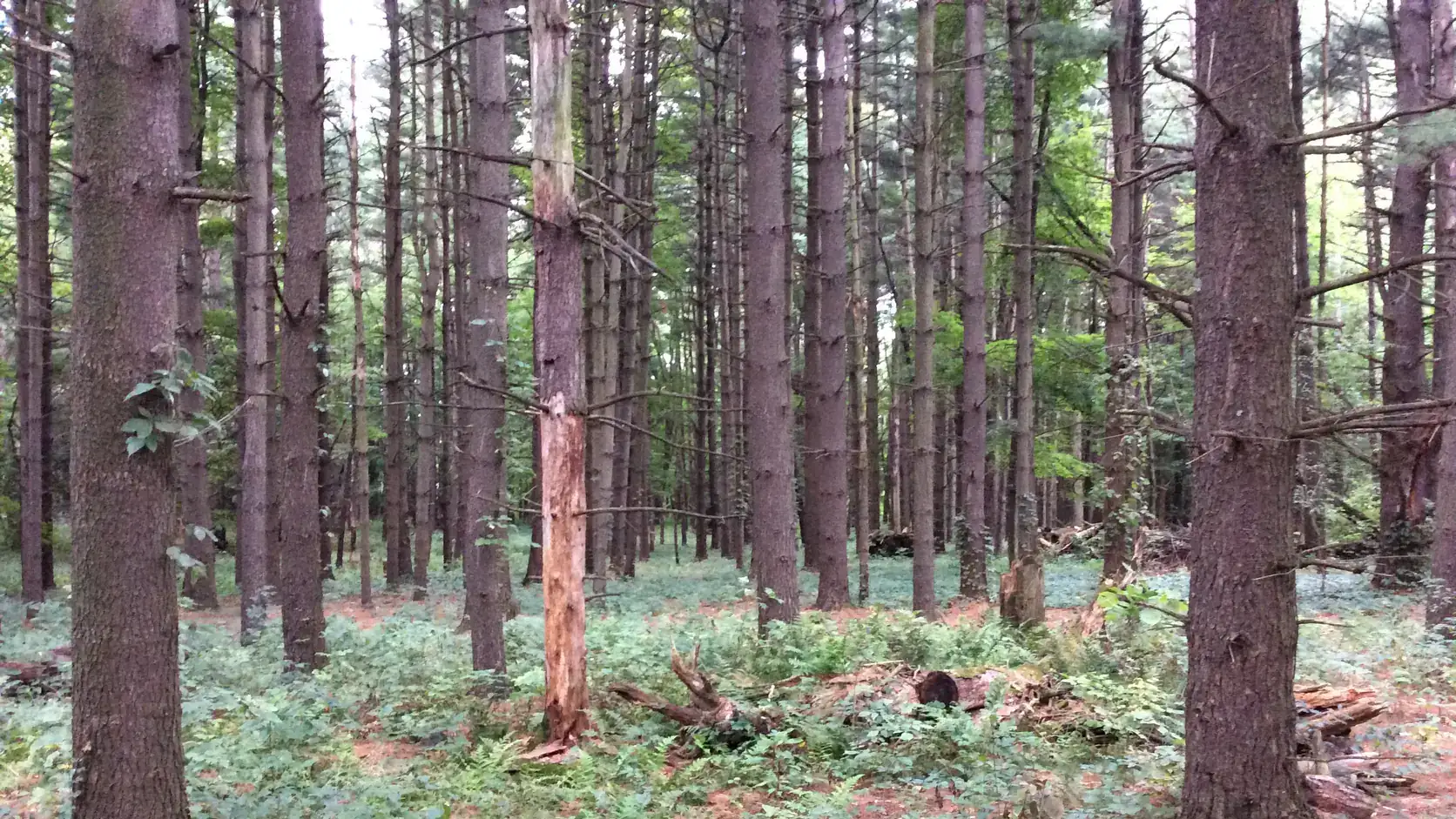
There is no honest statewide answer to the question, “How many acres do I need to sell timber?” Acreage is a rough proxy. Buyers care about merchantable volume, species, quality, access, hauling distance, harvest cost, and current demand.
A small tract with concentrated, mature, high-quality timber and easy access may interest a buyer. A larger tract with low volume, poor access, steep ground, scattered yard trees, or products outside local demand may not.
Why acreage appears in buyer criteria
Every prospective sale carries fixed work. A buyer or forester may need to review maps, travel to the property, inspect timber, plan access, prepare terms, move equipment, establish a landing, and arrange trucking. A tract needs enough potential value to justify those costs and risks.
That is why many companies publish a minimum acreage or tree threshold. The number is a business rule for that company, not a universal law of timber value.
Timber Buyers Ohio does not publish a made-up minimum. The service reviews connected wooded acreage together with apparent merchantable volume, species, quality, access, terrain, hauling distance, harvest history, timing, and current buyer demand.
The information that matters more than one number
Wooded acreage and harvest acreage
Total parcel acreage can be misleading. A 60-acre parcel may contain 15 wooded acres. An owner may want to harvest only part of those woods. State both the total parcel acreage and the approximate acres being considered.
Merchantable timber
A tree must have a marketable product, not merely be tall or old. Buyers consider species, diameter, usable log length, straightness, branching, defects, rot, metal, and likely grade. An on-site inspection or timber cruise may be required.
Concentration
Commercial timber spread thinly across a property may cost more to harvest than a similar volume in a workable stand. Steep slopes, ravines, wet ground, crops, houses, power lines, fences, and protected areas can further reduce the workable area.
Access and trucking
The route from stump to mill matters. A buyer looks for equipment access, landing space, truck access, bridges or culverts, road limits, stream crossings, and distance to a market.
Buyer demand
Different buyers need different species and products. A buyer’s operating area and mill relationships change over time. A property may be outside one buyer’s current range while fitting another.
Yard trees are a separate market
Individual trees near houses, septic systems, utilities, streets, or landscaping usually require tree-service equipment and carry risks unlike a woods harvest. Many standing-timber buyers do not remove single yard trees.
Do not describe a hazardous or residential tree-removal request as a timber sale. Contact an insured tree-care company for work near buildings and utilities.
How to ask for a useful first review
Provide:
- County, ZIP code, and nearest road
- Total parcel acres and approximate wooded acres
- Acres being considered for harvest
- Known species and approximate tree size
- Last harvest date, if known
- Photos of the stand, representative trunks, road, and terrain
- Notes about slopes, streams, wet areas, fences, and structures
- The owner’s goal and timing
This information does not establish timber value. It helps a service, buyer, or forester decide whether a site visit or deeper review makes sense.
When a forester is the better first call
Call a professional forester when the owner needs an independent inventory, management plan, tree selection, value estimate, sale preparation, competitive bidding, or harvest oversight. ODNR’s Call Before You Cut program can help landowners find forestry resources.
A forester may also help an owner decide that waiting, thinning differently, or doing no sale is the better choice. A buyer’s job is to evaluate a purchase. Those are not the same assignment.
The practical answer
Do not disqualify or market a property based on acreage alone. Gather the tract facts and ask for a fit review. If buyer interest is unlikely, the owner should receive a plain answer rather than a forced lead handoff.